
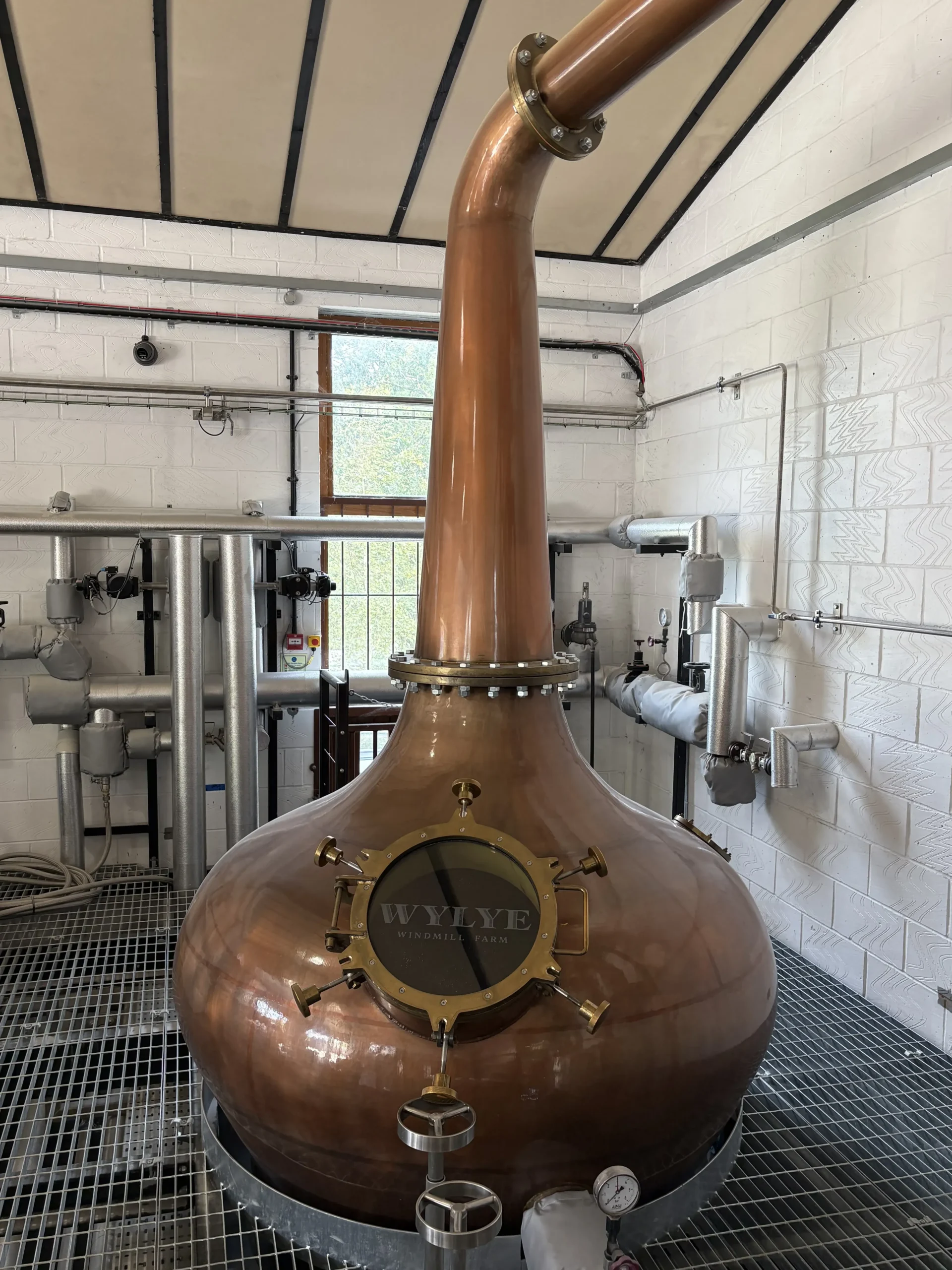
It’s no secret that there has been a boom in new distilleries in recent times – Scotland has seen a resurgence along with my home country Australia and of course England. Travelling to England at least once or twice a year for over 10 years to visit family puts me in a unique position. Although I don’t live there, I have been able to observe this resurgence year by year wherever I visit. Every time I return I make a point to try and sniff out one or two new distilleries to visit – some of them are doing things right, some wrong, but I’ve never stepped foot in one that had me saying to myself, I wouldn’t change a thing… until now.
If you haven’t heard about Wylye Distillery in Wiltshire, you’re not alone – neither had I until a week ago. Having just finished a 10-day tour of Scotland, I turned my attention to England. I haven’t really explored the Wiltshire area, so when I noticed a few distilleries around here I started doing some research. That’s when I found Wylye, and the more I read about this distillery, the more I knew I had to visit.
Founded in 2022 by Sam Barber, the distillery sits just outside the quaint village of Wylye, after which it is named. Production began in July 2023. A collection of four old farm buildings known as Windmill Farm has been repurposed, each serving a separate area of production. As you’ll read as this article goes on, Sam is doing things differently to most new distilleries – one of them being that he doesn’t make gin or vodka. His focus is purely the water of life. Sam also explains that every ingredient except the peated malt comes from within a few miles of the farm.
The first building we visit is the Stables, which houses the water purification, malt storage and future bottling. The water is supplied by a chalk aquifer located on the farm itself, and while the chalk acts as a natural filter, it does mean the water is quite hard. This is a double-edged sword – it’s good for mashing and can help extract more sugars from the barley, but it does mean more maintenance. I dare not comment or start the old debate about whether it affects spirit character. Barley is supplied by Manor Farm and malted at Warminster Maltings, Britain’s oldest working floor maltings. Sam has predominantly been using Laureate but mentioned he’s previously used Maris Otter and will be utilising some Golden Promise soon.
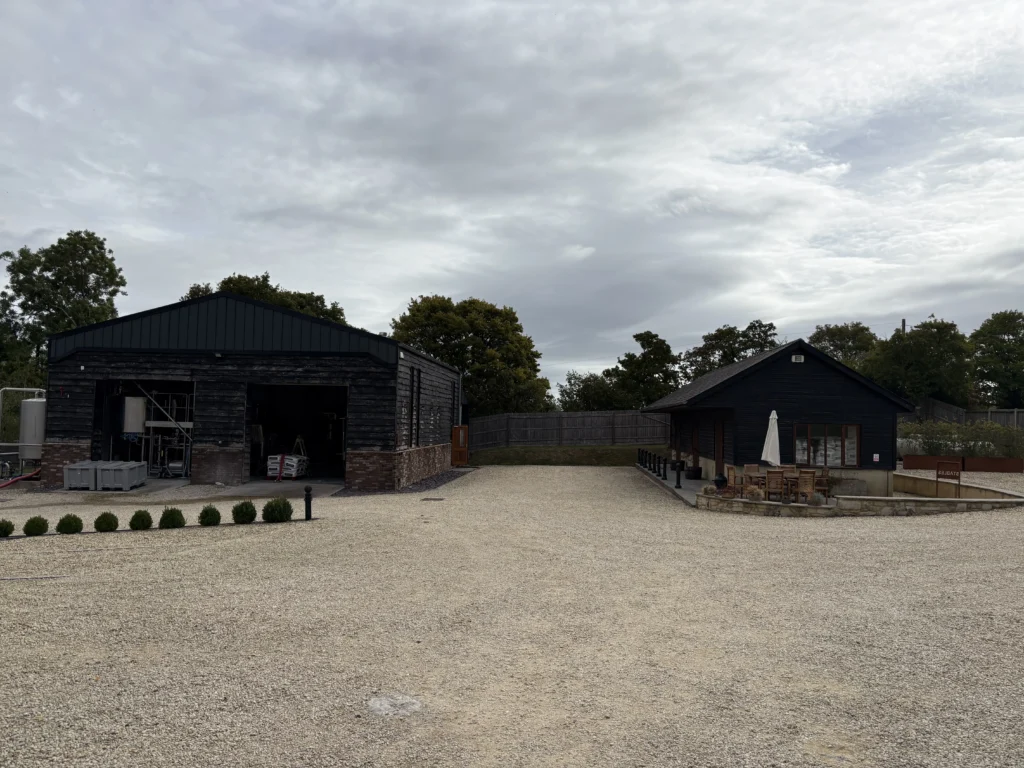
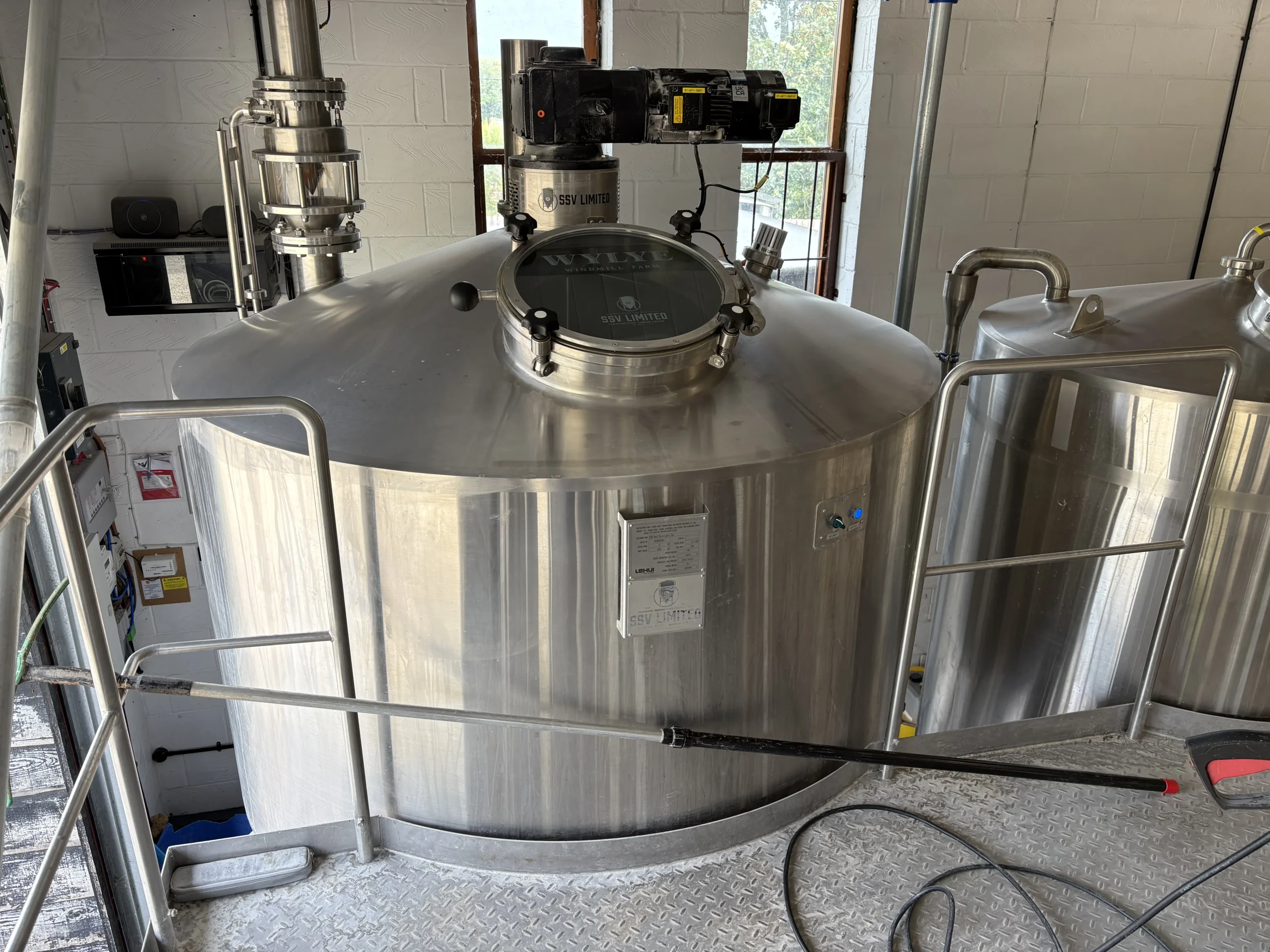
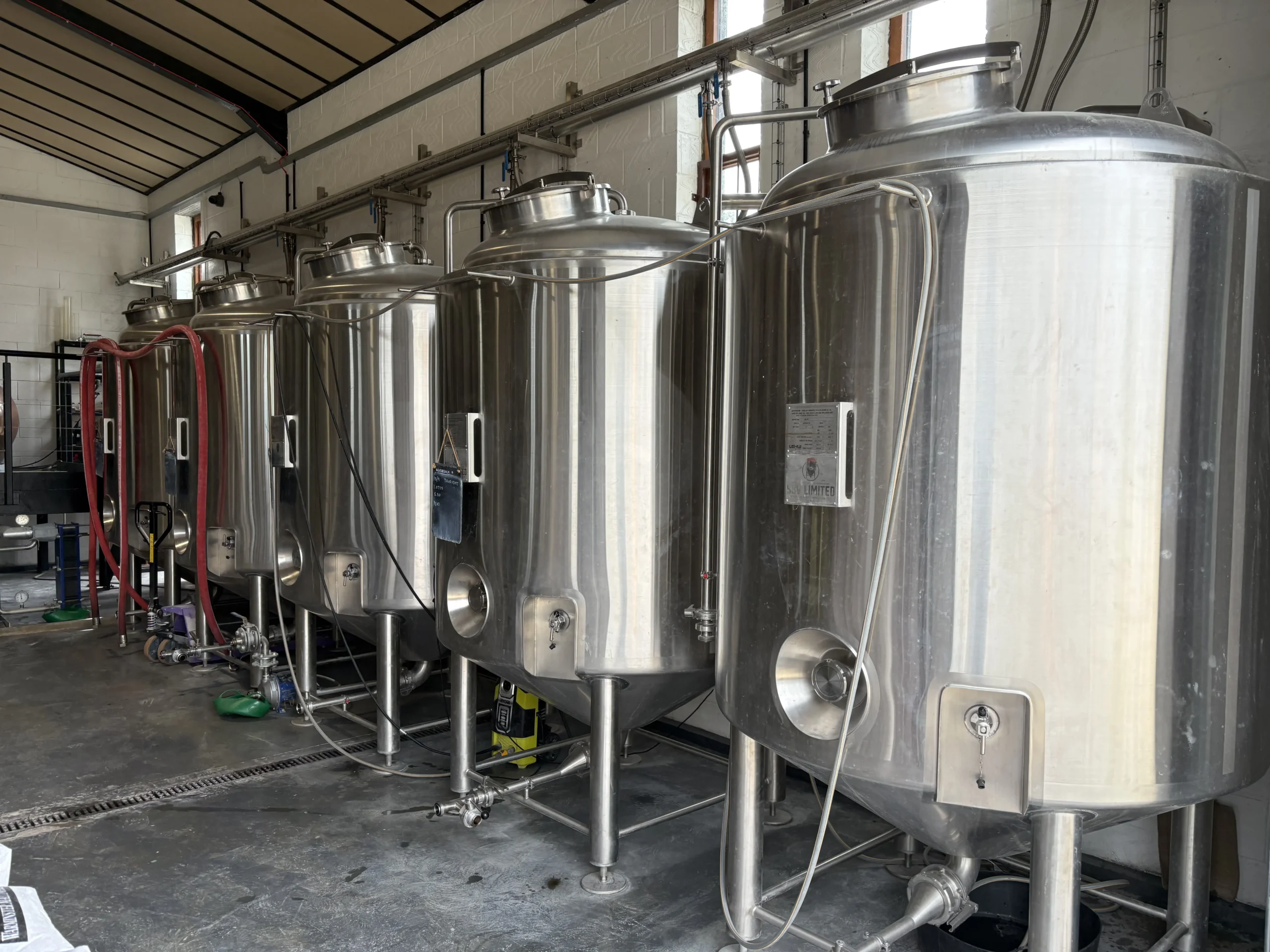
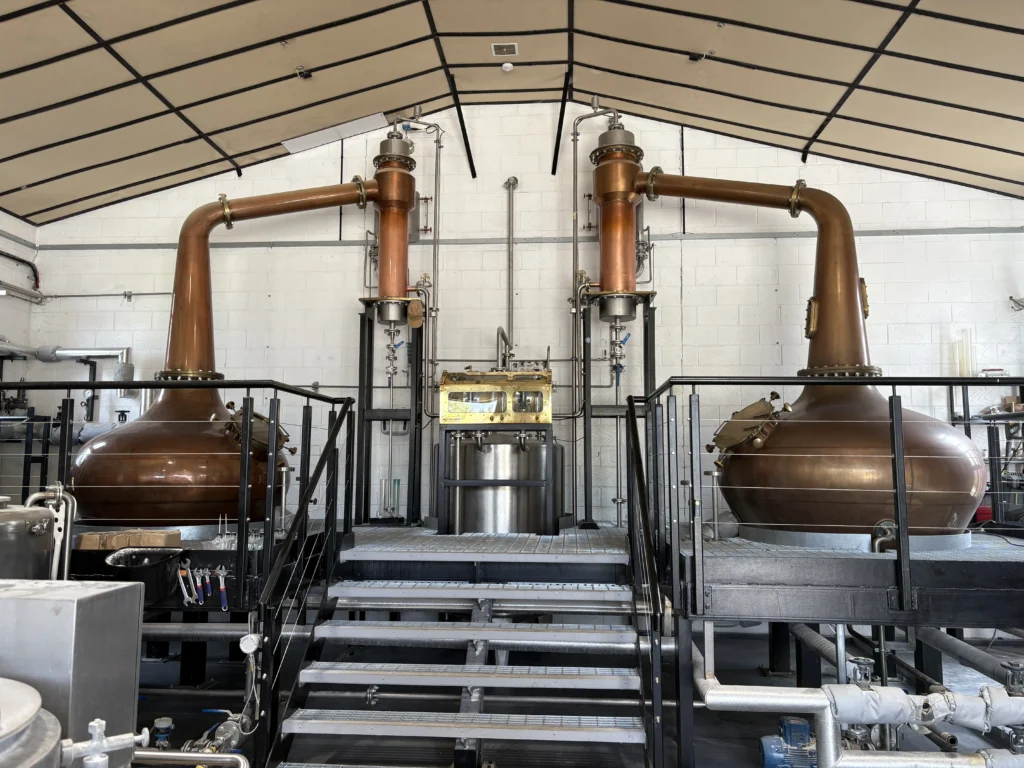
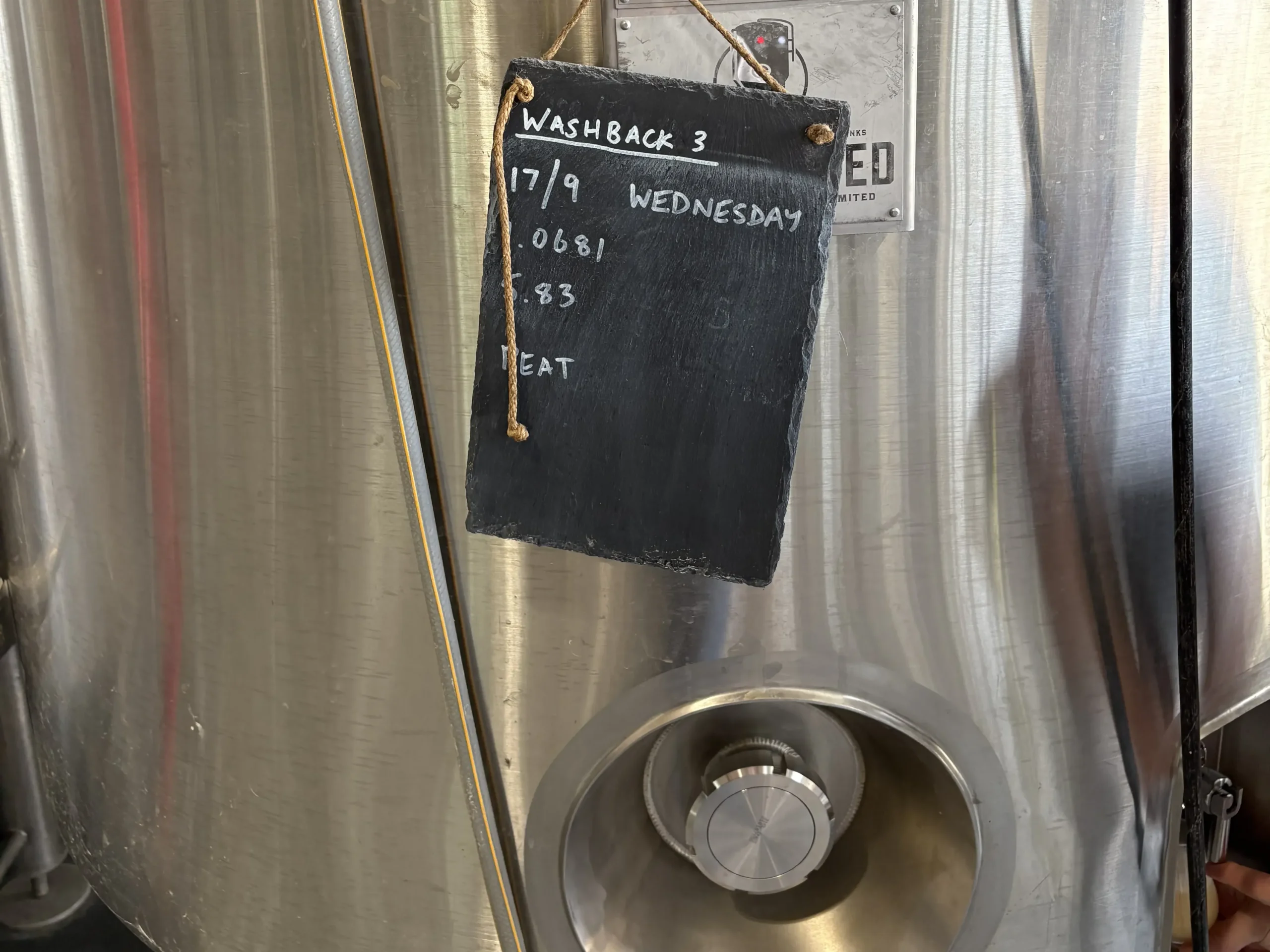
Next up is the Haybarn, which houses the brewing and distillation. Here we see a hand-fed mill along with a half-tonne semi-lauter mash tun and five stainless steel, temperature-controlled washbacks. Sam is currently mashing and distilling five times a week, Monday to Friday, but mentions plans to decrease this as his warehouses reach maximum capacity. Mashing is done to achieve a cloudy wort and fermentation is temperature controlled, with a long ferment of around 120 hours. The ABV of the wash is slightly higher than average, at around 10%.
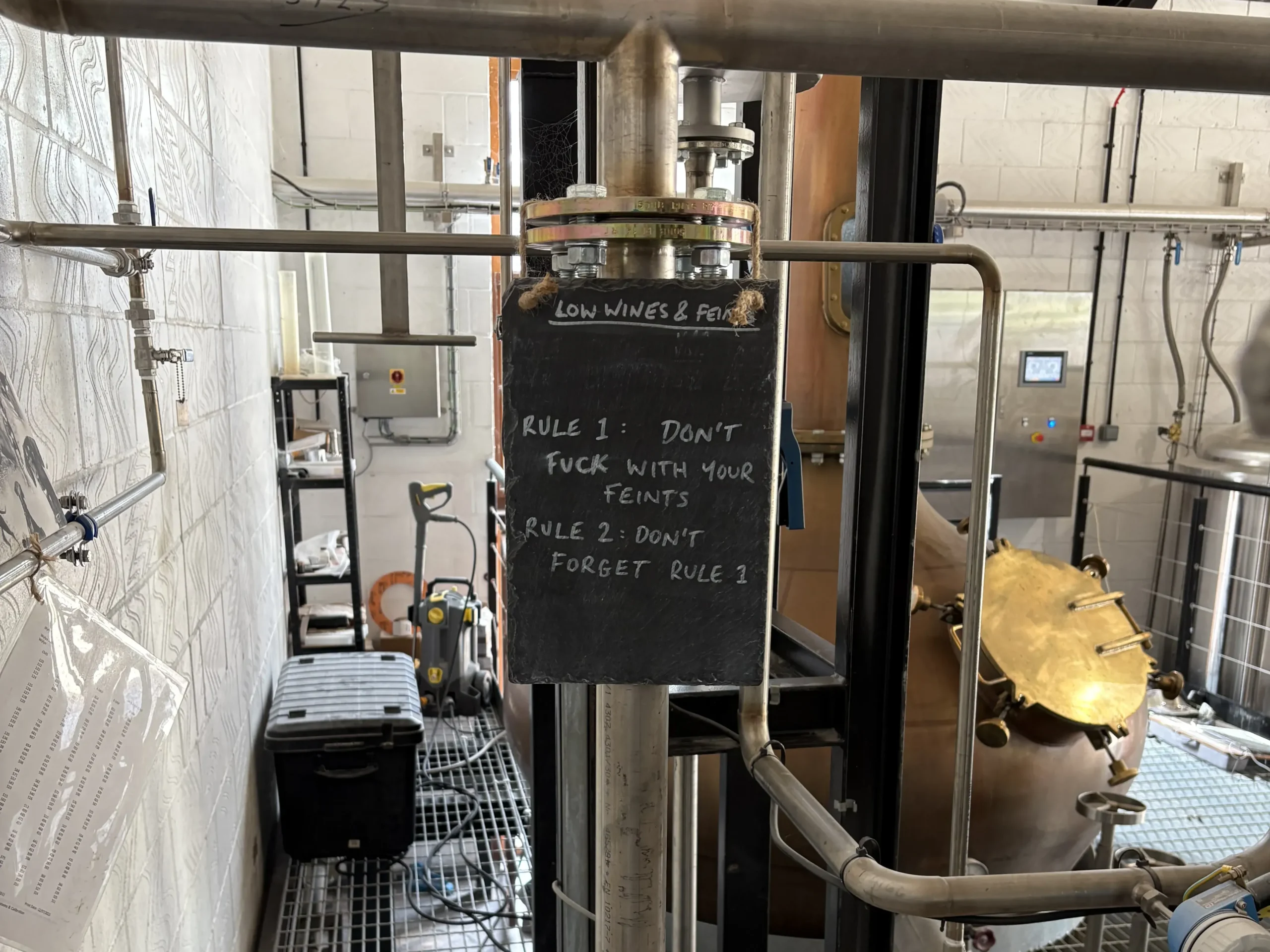
On the back wall are a Forsyths wash still and spirit still, with shell and tube condensers. Foreshots and feints are collected into a single tank. Much like at Clynelish, famous for its waxy spirit, Sam doesn’t clean his foreshots and feints receiver. With 40% of every spirit still charge drawn from it, that build-up is part of every run – and at only three years in, it’s likely still developing. Sam also mentions he’s running a slow distillation rate with each run yielding about 190 LPA and his current yearly output around 45,000 LPA – not bad considering it’s a one-man operation.
While he has been focusing most of the operation so far on unpeated spirit, he has also begun distilling some peated. This is the exception to everything being local – Warminster Maltings doesn’t produce peated malt, so it has to be sourced elsewhere, peated with mainland peat. The peated runs use malt at around 55ppm, blended with 30% unpeated malt to bring it down to around 35ppm.
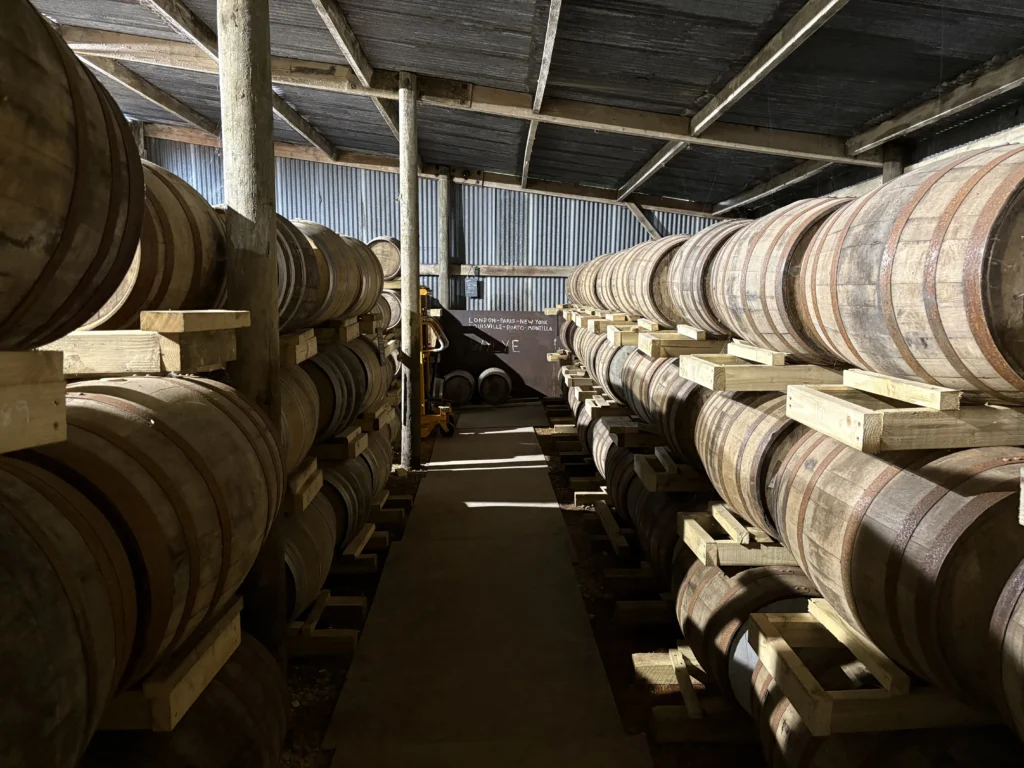
Time to visit the Cowsheds, where over 1,000 casks are already maturing – no small feat in just over three years. In here we see a variety of casks, with ex-Bourbon as the backbone. He also has a good supply of ex-Sherry casks through a few different seasoning programmes. He mentions not all Sherry casks are seasoned the same, something most whisky enthusiasts forget but a very important factor. This is why Sam made the decision to spend time visiting and working with the bodegas directly before committing to the casks. He knows exactly what he’s getting and the history behind each cask, and it shows. He allowed me to try a few samples from casks not yet old enough to be called whisky, which gave me a good idea of what’s to come. The spirit has a lovely malt and cereal character up front with some gentle fruit notes coming through and a wonderful viscous, waxy mouthfeel – it has some weight behind it.
This leads into Wylye’s second distinctive quality: nothing is planned for extra maturation or finishing (whatever term you prefer) – it’s all full maturation. That’s not necessarily difficult with ex-Bourbon or refill Sherry casks, but with some 1st-fill ex-Sherry, port, red wine and the like, full maturation can be tricky. Wylye’s spirit seems different, though. I was able to try a sample from an ex-red wine cask, and while it’s early days, I feel he’s on to something. The spirit character, along with Sam’s knowledge of his casks, makes for a good combination – there is enough weight to stand up to and complement the wood, rather than be overpowered by it.
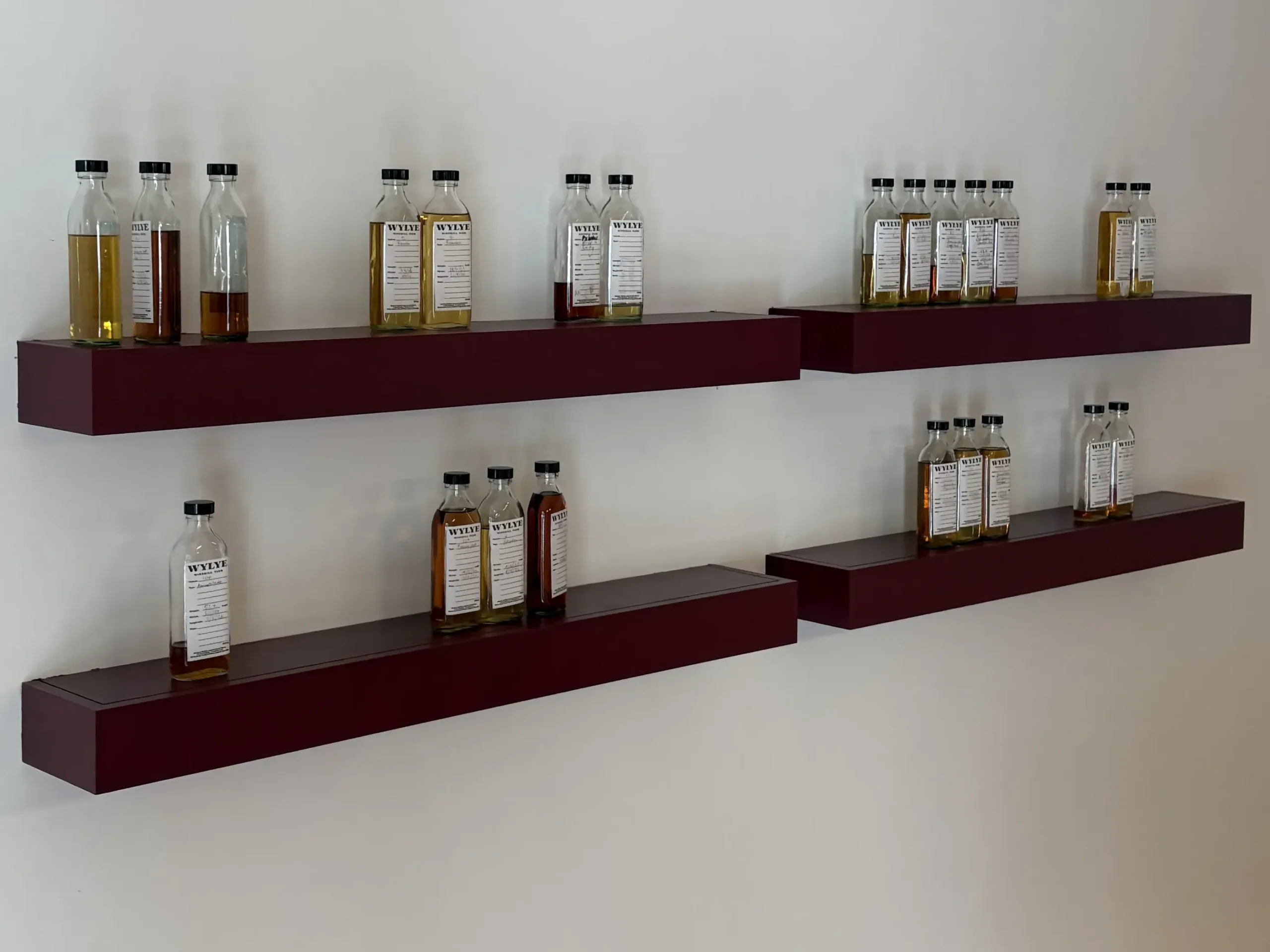
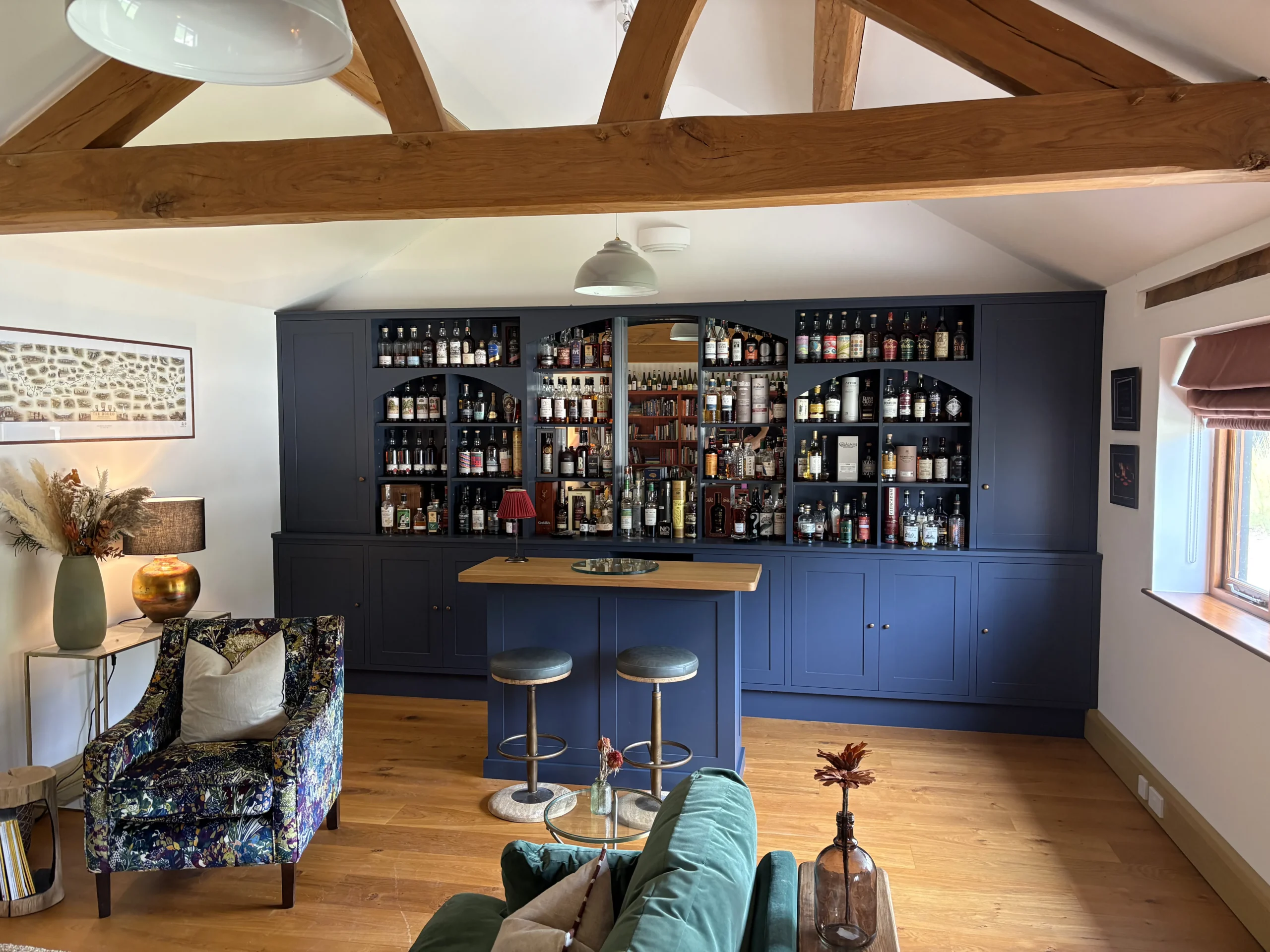
Finally, we head to the Dairy for a quick tour, as time is running out before Sam heads back to London. This has been turned into his blending, dining and tasting rooms. In here we see a wall of cask samples showing how all his casks are developing so far. A quick taste of the new make, both unpeated and peated, confirms what I’d already gathered – this is great spirit. Both the dining and tasting rooms look fantastic, and I hope to revisit many times when I’m back in England.
Thank you very much to Sam for showing me around – he is a wealth of knowledge. Whilst I claim to know a fair bit about whisky, I still very much consider myself an amateur (hence the website name), and I hope I’ve done justice to the knowledge and information Sam shared with me. Everything he is doing here has been meticulously planned with a goal in mind – to create whisky for whisky people. I never thought I’d find myself in a position where one of my favourite distilleries is somewhere that hasn’t even officially released a whisky, but here we are. I for one will be watching and looking forward to what Wylye produces in the years to come.